
5 Common Planning Mistakes to Avoid When Travelling to France
Plan Your Trip
- First Time in France
- Travel Tips
Itineraries
- France Itineraries
- France Road Trips
Destinations
- Regions of France
- Hidden Gems
Planning a trip to France is a dream. Misjudging the logistics is what turns that dream into a fortnight of packing, driving, and arriving just after the kitchen closed.
From over-stuffed itineraries to meals missed by twenty minutes, even seasoned travellers fall into the same predictable traps when they organise a journey across France. None of them are about taste or budget. They are about how the country actually works from one day to the next, which is exactly the part no guidebook spells out.
Below are the five mistakes I see most often, what each one really costs you, and what to do instead. Fix them and you will not need a bigger budget. You will simply get more of France for the same one.
In this guide
Quick Look: Planning Pitfalls at a Glance
| Common Mistake | What It Costs You | What To Do Instead |
|---|---|---|
| 1. Packing in too much | Half a day lost to every change of base | Three nights minimum, two or three bases a week |
| 2. The wrong transport | Parking bills, tolls, missed rail fares, Crit’Air fines | TGV between cities, a car for the countryside |
| 3. Eating off French time | Arriving at 2:45 p.m. to a closed kitchen | Lunch 12–2, dinner from 7:30, and book ahead |
| 4. The Sunday shutdown | Shops, pharmacies and some museums closed | Shop Saturday; keep Sunday for markets and châteaux |
| 5. Trusting the map | 50 km that quietly takes 75 minutes | Add a third to rural drive times, cap at two hours a day |
1. Packing Too Much Into a Single Trip
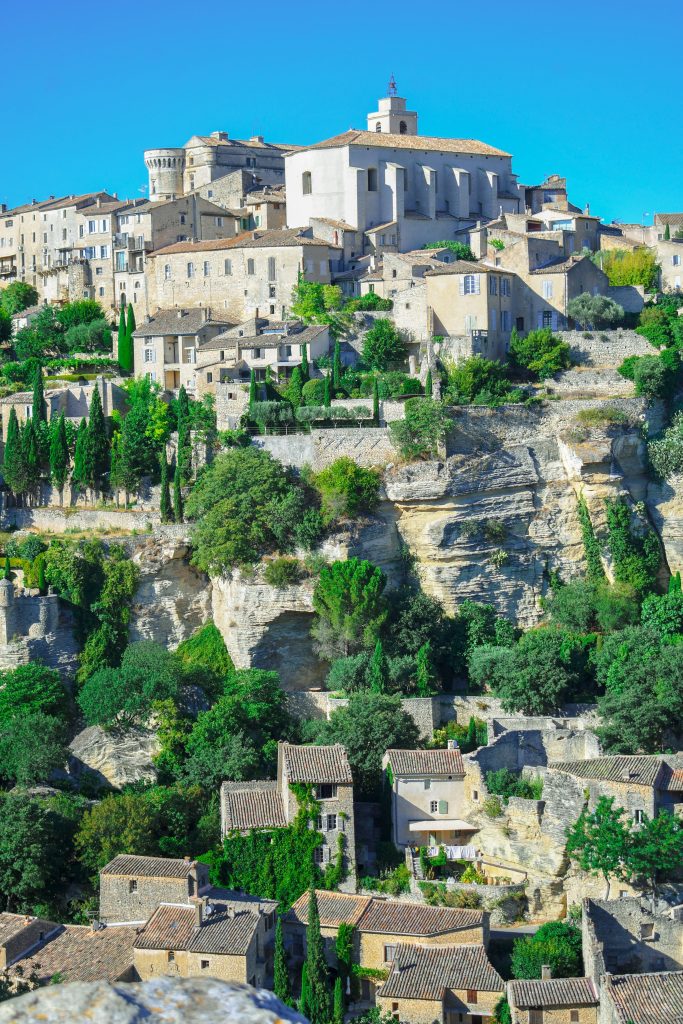
This is the one I see most often, and it is almost always written with the best intentions. Ten days, and the plan reads Paris, then the Loire, then Normandy, then Provence, then the Riviera. On a map it looks reasonable. France is roughly the size of Texas, and Paris to Nice is 930 km — further than London to Edinburgh and back.
The half-day you lose every time you move
Changing base is never just the journey. It is checking out, the transfer, waiting for a room that is not ready before 3 p.m., finding somewhere to eat in a town you do not know yet, and unpacking again. Budget half a day for every move and the arithmetic changes: four bases in ten days means two whole days spent in transition, before you have driven a single kilometre for pleasure.
The rule I give every client
- Three nights minimum in each base. Two nights gives you one real day, and you will spend it doing laundry and finding the supermarket.
- Two to three bases per week, never more.
- One unplanned day per week. It is reliably the day people describe when they get home.
- Arrival day counts for nothing. Jet lag plus an unfamiliar rental car is how good holidays start badly.
If you would rather see this worked through than argued, How to Spend 10 Days in France Without Feeling Rushed does exactly that, and 2 Weeks in France shows what the extra week actually buys you.
2. Choosing the Wrong Transport for the Wrong Leg
The question is not car or train. It is which one for which leg — and most good French itineraries use both. France has one of the fastest rail networks in the world and some of the most rewarding back roads in Europe. Choosing one and refusing the other is what costs you.
Paris ➔ Lyon: 1 h 57
Paris ➔ Bordeaux: 2 h 04
Paris ➔ Strasbourg: 1 h 46
Paris ➔ Avignon: 2 h 40
Paris ➔ Marseille: 3 h 10
Take the train between cities
- City centre to city centre, with no parking to find at the other end and no tolls on the way.
- A car inside a French city is mostly a bill: expect €30 to €45 a day for a central car park, and historic centres that are half pedestrianised.
- You arrive rested. Three hours on a TGV is not three hours of concentration.
Take the car for everything the train cannot reach
- The perched villages of Provence, the Dordogne valley, the D-Day beaches, the Alsace wine route, the Brittany coast.
- Markets, vineyards and viewpoints that exist precisely because no station was ever built there.
- For four people, one rental car is usually cheaper than four rail tickets.
The trap nobody warns you about: Crit’Air
Paris, Lyon, Grenoble, Strasbourg, Marseille, Toulouse and a growing list of French cities are low-emission zones. Driving into one without a Crit’Air sticker on the windscreen is a fine, and the sticker has to be ordered in advance from the government site certificat-air.gouv.fr and posted to you. Rental cars normally carry one already — check it is there when you collect the keys, not when you are stopped.
Booking, without paying a middleman
- TGV seats open three to four months ahead, and the cheap fares go first. Booking late on a popular route can cost three times as much.
- Book direct at SNCF Connect. Resellers add fees for nothing.
- Coming from London or Brussels, book Eurostar direct for the same reason.
I have written the full comparison, with the cases where each one wins, in Car vs. Train in France.
3. Assuming You Can Eat Whenever You Are Hungry

You arrive in a village at 2:45 p.m., delighted with yourself and extremely hungry, and everything is shut. This is not bad luck and it is not rudeness. France runs on service hours, not opening hours, and the kitchen is a different thing from the door.
The hours that actually apply
- Lunch is served from 12:00 to 14:00. Last orders are often 13:30, earlier in small places.
- Dinner starts at 19:30, rarely before. In villages, last orders can be 21:00; in cities, closer to 22:00.
- Between services a café will happily serve you a drink and perhaps a croque-monsieur. Not a meal.
- Village bakeries close roughly 13:00 to 16:00. The bread you did not buy at 12:55 does not exist at 15:00.
- Markets are a morning affair. By 13:00 the stalls are folded and the square is being swept.
The days that catch people out
Sunday evening and all day Monday, a large share of restaurants outside the big cities are closed — that is when the staff take their weekend. In a village with two restaurants, Monday can mean none. This is the single most common reason people end up eating supermarket crisps in a beautiful place.
What to do instead
- Eat on French time. It is far easier than fighting it, and the food is better at the hours it was cooked for.
- Book dinner, even somewhere that looks quiet. Many village restaurants seat twenty people and are genuinely full.
- Order the formule or menu du jour at lunch. Same kitchen, same chef, frequently half the evening price.
- Keep a picnic in the boot. Bread, cheese and fruit bought at the morning market is not a fallback, it is one of the best meals of the trip.
4. Underestimating the Sunday (and Monday) Shutdown
Sunday in France is not a shopping day, and no amount of planning changes that. What it is, is one of the best days of the week — provided you know what it is for.
What is closed
- Supermarkets: Sunday morning only, shutters down by 12:30 or 13:00. Nothing afterwards.
- Small shops: all day Sunday, and very often Monday morning as well.
- Pharmacies: closed, but there is always a pharmacie de garde on duty. The list is posted on the door of every pharmacy in town.
- Museums: many close on Monday. Note the exception that catches almost everyone — the Louvre closes on Tuesday, the Musée d’Orsay on Monday. Get that backwards and you lose the day you built the week around.
What Sunday is unusually good for
- Markets. The best markets in France are Sunday morning, and they are the reason to set an alarm on holiday.
- Châteaux, gardens, coastal paths and lunches with no particular end time.
- Driving. Heavy lorries are banned from Saturday 10 p.m. to Sunday 10 p.m., so the roads are calmer than any other day of the week.
The fix is one Saturday errand
Do the shopping on Saturday: fuel, water, breakfast, anything for a picnic, and any pharmacy item you might conceivably need. Then let Sunday be the day you stop planning. If you want somewhere worth spending it, the villages in 10 Hidden Gems in Provence are built for exactly that kind of day.
5. Trusting the Map on Driving Times
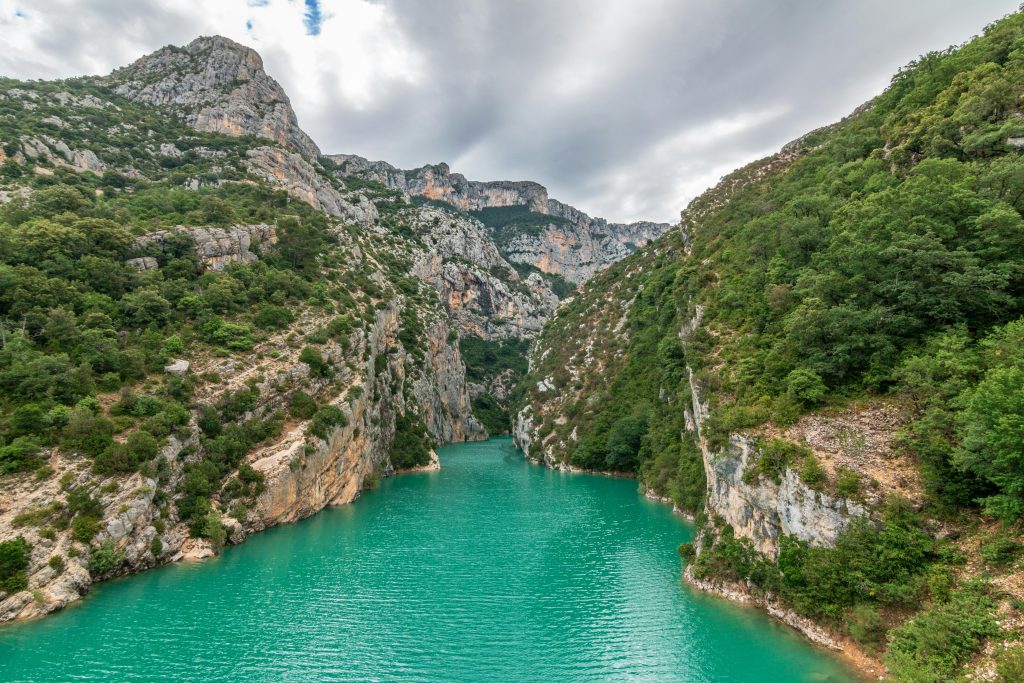
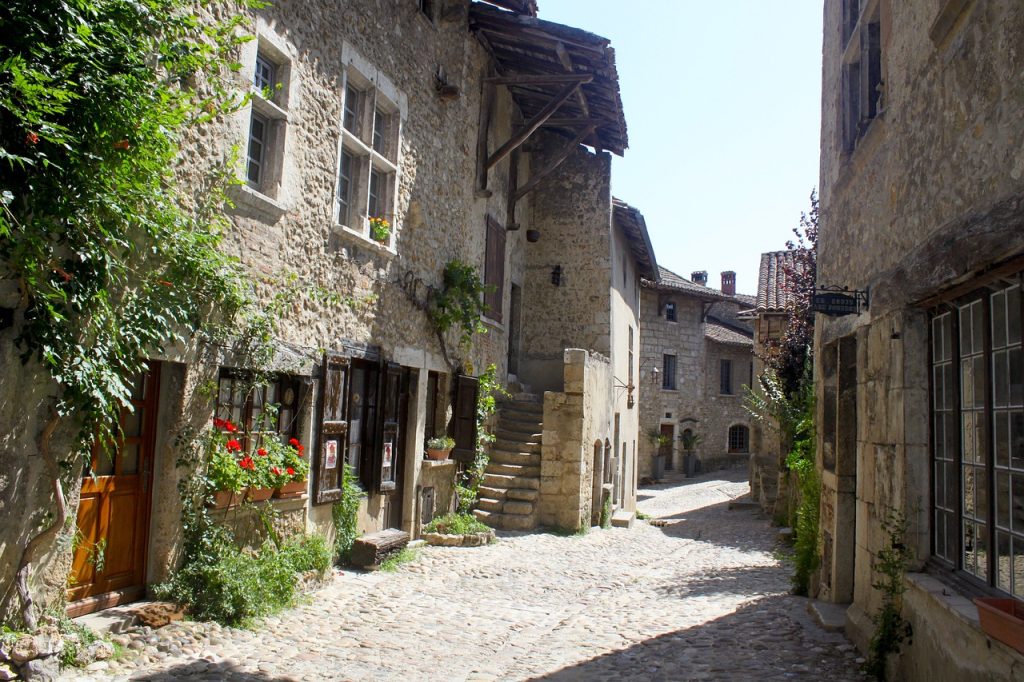
Fifty kilometres in the Dordogne is not thirty minutes. It is an hour and a quarter. The roads are départementales that follow rivers rather than straight lines, every village drops you to 30 km/h, and there is a roundabout roughly every time you get comfortable. Nothing is wrong. The map simply measures a different thing from the day.
Add a third, then add the season
- Rural routes: add 30% to whatever the map quotes. Mapping apps give free-flowing times on empty roads.
- Add stops. Nobody drives past a village like Beynac or Gordes without stopping, and nobody should.
- Avoid the changeover weekends. The last Saturday of July and the first of August are the chassés-croisés, when the whole country swaps holidays at once. Bison Futé, the national traffic service, marks those days black, and they earn it.
Rules that surprise visitors
- 80 km/h on two-lane roads with no central barrier, 90 in some départements. The signs are the authority, not the rental car.
- Motorways are tolled. Paris to Nice is roughly €80 in péages before you have bought a litre of fuel.
- If your licence was not issued in the EU, carry an International Driving Permit alongside it. It cannot be issued once you are in France.
- Speed cameras are common, fixed and mobile, and the fines follow rental cars home with an administration fee attached.
The rule I give every client
- Two hours of driving a day, maximum. Three only when the drive itself is the point — as it is on the Route Napoléon.
- Never a long drive on arrival day.
- Fill the tank before Sunday. Many rural stations are unattended and card-only, and not every foreign card works at them.
The 5 Days in Normandy itinerary is a good illustration of what a realistic driving day looks like when the distances are honest.
The Ten-Minute Check That Catches All Five
Every one of these mistakes is invisible on a list of places and obvious on a day-by-day plan. Write your trip out as days rather than destinations, put the driving time between each stop, and mark which days fall on a Sunday or a Monday. The over-packed week shows itself immediately. So does the afternoon you arrive at 2:45 p.m. in a village with nowhere to eat, and the museum you built a day around that turns out to be closed.
You can do that on paper, and it works. If it is easier, my trip planner does it for you: it lays the days out, measures the real drives between your stops, and tells you when a day has quietly turned into six hours of motorway. It is free, there is no account to create, and there is nothing to cancel.
FAQ
Need Help Designing Your Perfect French Journey?
Free planner
Planning this trip yourself?
Lay out your days, drag in the places worth your time, and see straight away when a day is trying to hold too much. Free, and you don’t need an account to start.

Madison Laffont
Travel planner · Journeasy France
I have lived all over France — I moved my whole life, and every corner of it turned out to be its own place. Travelling once, I met people who were only going to see Paris, and I felt frustrated on their behalf. There is so much more. That is where Journeasy France came from.