
7 Day Southwest France Itinerary: Dordogne, Bordeaux & Medieval Villages
Plan Your Trip
- First Time in France
- Travel Tips
Itineraries
- France Itineraries
- France Road Trips
Destinations
- Regions of France
- Hidden Gems
I didn’t just study this region on a map—I walked it. Having completed the entire 750km GR65 route from Le Puy-en-Velay to Saint-Jean-Pied-de-Port, I fell in love with the hidden corners of the Quercy and the Dordogne. I saw these landscapes unfold at the pace of a walker, and now I’ve distilled that experience into a 7-day road trip itinerary designed just for you. This journey isn’t just about ticking off landmarks; it’s about slow-paced discovery, culinary delights, and the timeless charm of medieval France. Whether you’re exploring world-renowned vineyards or standing before ancient cliffside cathedrals, I’ve handled all the research so you can focus on making memories. Get ready to experience the authentic heart of the Southwest, curated by someone who has walked every step of the way.
This 7 day Southwest France itinerary takes you through some of the most beautiful destinations in the region, from the elegant city of Bordeaux to the fairy-tale villages of the Dordogne and the spectacular hilltop sanctuary of Rocamadour.
It’s the perfect road trip for travelers looking to experience historic villages, countryside landscapes, and world-famous wine regions.
Map of this Southwest France itinerary
Interactive map of this 7 day Southwest France itinerary including Bordeaux, Dordogne villages, Rocamadour, Toulouse and Carcassonne.
In this guide
Day 1 – Explore Bordeaux – The Elegant Gateway
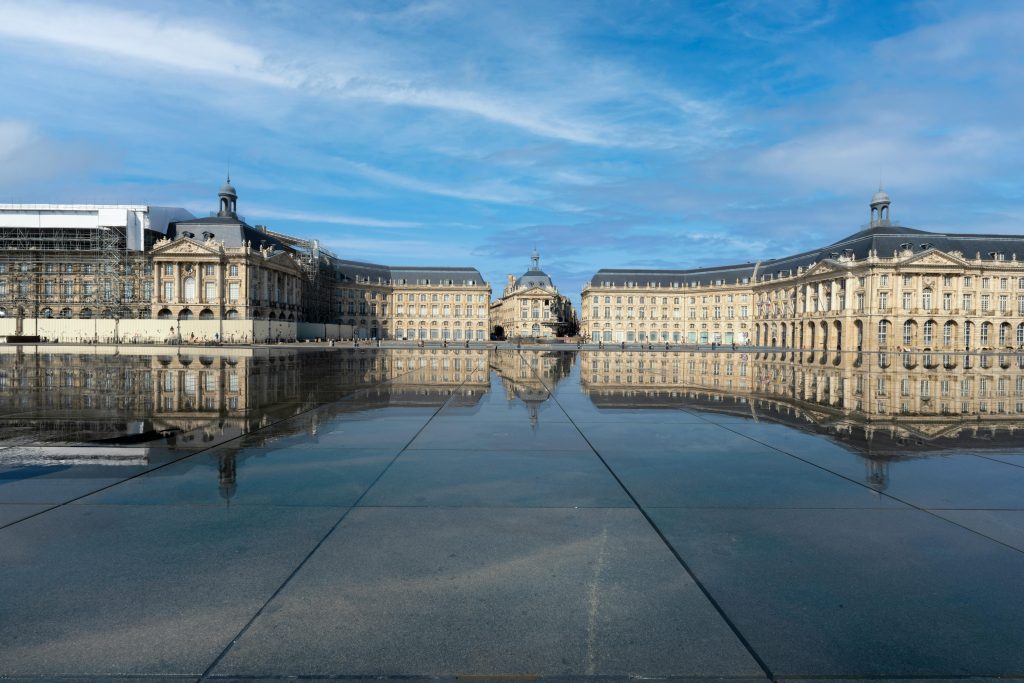
Start your journey in Bordeaux, one of the most elegant cities in France and the gateway to the world-famous wine region. Spend your first day wandering through the historic center, a UNESCO World Heritage site where every 18th-century facade tells a story of history and prosperity.
The Highlights of your Bordeaux stopover:
- Place de la Bourse & The Water Mirror (Miroir d’Eau): This is the city’s most iconic landmark. At high tide, the reflection of the majestic buildings on the thin sheet of water creates a magical scene that is especially photogenic at sunset.
- Saint-André Cathedral: For the best view in the city, climb the Pey-Berland Tower. You will be rewarded with a breathtaking panoramic vista of the Bordeaux rooftops.
- The Historic Heart: Get lost in the maze of pedestrian streets, from the Saint-Pierre district to the « Grosse Cloche. » This is where medieval charm meets modern, vibrant city life.
- The Garonne Riverfront: The riverbanks are perfect for a scenic walk, a bike ride, or simply watching the boats glide along the river.
Authentic Experiences & Dining Picks:
Wine Tasting at CIVB: To discover the true diversity of local terroirs, visit the « Bar à Vin » managed by the Bordeaux Wine Council. It’s set in a majestic building and offers high-quality wines at very accessible prices.
A Gourmet Stop at Marché des Capucins: Often called « the belly of Bordeaux, » this is the best place to taste fresh oysters from the nearby Arcachon Bay paired with a glass of local white wine in a truly authentic, lively atmosphere.
Dinner at « Le Petit Commerce »: Tucked away in the Saint-Pierre district, this is a local institution for seafood lovers, offering a relaxed and quintessentially Bordelais experience.
Sensory Journey at La Cité du Vin: More than just a museum, this is a unique-in-the-world sensory adventure. Don’t miss the tasting session at the 8th-floor belvedere, which offers a stunning 360-degree view of the entire city.
Day 2 – Saint-Émilion – A Journey Through Vines and History
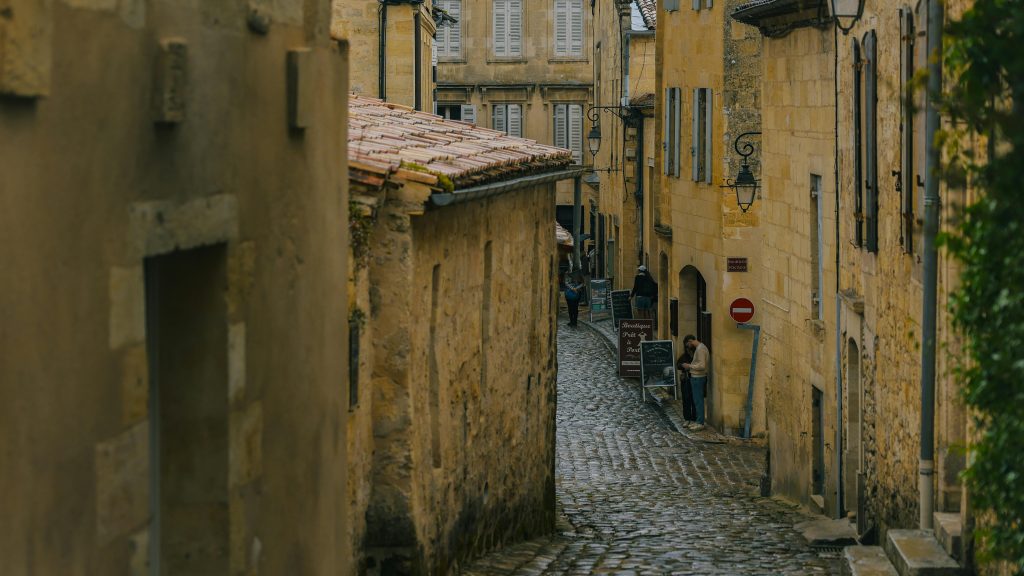
After leaving the bustle of Bordeaux, a short drive takes you to the enchanting village of Saint-Émilion, a UNESCO World Heritage site known globally for its wine and its stunning medieval architecture.
The Highlights of your Saint-Émilion day:
- The Medieval Village: Wander through the steep, narrow cobblestone streets. You will feel as if you’ve traveled back in time as you explore the hidden passages and ancient stone buildings.
- The Monolithic Church: This is the crown jewel of the village—an incredible church carved directly into a massive limestone cliff.
- Vineyard Exploration: Saint-Émilion is surrounded by some of the most prestigious vineyards in France.
Curated Wine Experiences:
- The Grand Cru « Atelier »: For a truly immersive experience, I recommend the École du Vin (Wine School) in Saint-Émilion. They offer short, approachable workshops where you can learn to distinguish the unique profiles of Right Bank wines—all without feeling intimidated.
- Intimate Château Tours: Avoid the mass-market tours. I suggest booking an appointment at a smaller, family-owned château. These private visits often include a walk through the vines with the owner, followed by a tasting in their personal cellar, providing a far more authentic connection to the land and its history.
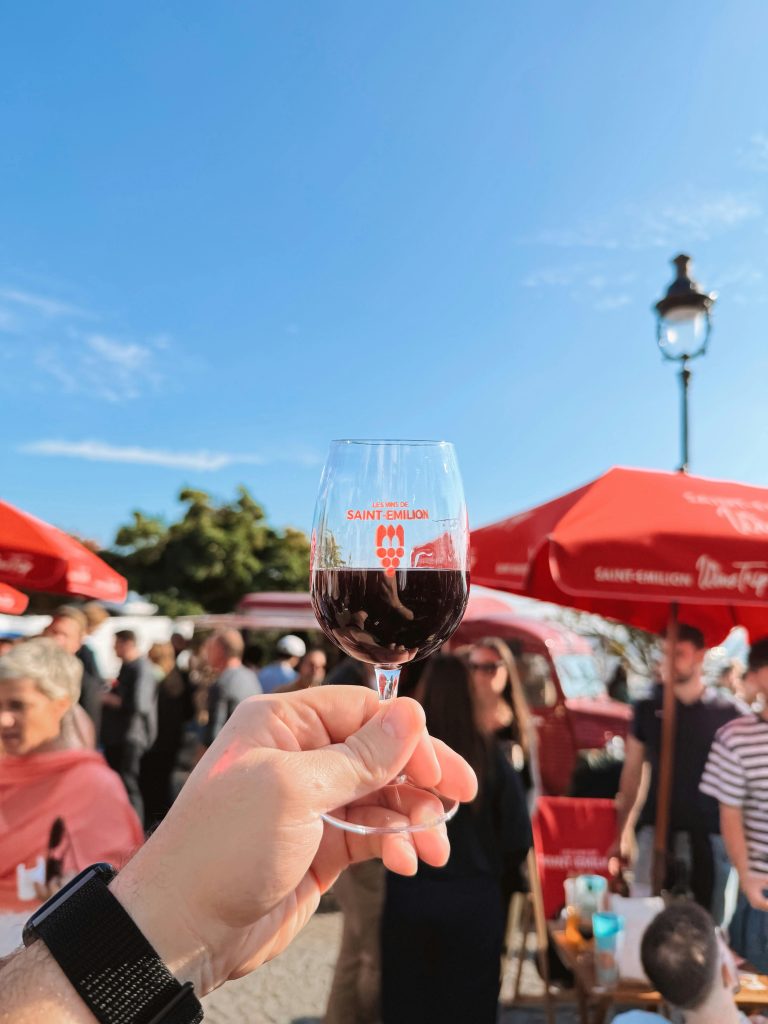
- Sunset Tasting on the Ramparts: For a quintessential moment, grab a bottle from a local boutique and head to the top of the village ramparts at sunset. Looking out over the golden-hued sea of vines while sipping a Saint-Émilion Grand Cru is a memory that will stay with you forever.
Authentic Treats:
The Original Macarons: Before you leave, make sure to try the local macarons from La Fabrique à Macarons. Unlike the colorful, airy versions you might be used to, these are the original 1620 recipe—soft, almondy, and the perfect pairing for a glass of sweet wine.
Day 3 – Drive to the Dordogne and Discover Sarlat
Today, your aventure deeper into the heart of the Dordogne region. Sarlat-la-Canéda is arguably one of the most beautiful medieval towns in France, famous for its golden-hued stone buildings, narrow alleys, and its world-class gastronomy.
The Highlights of your Sarlat experience:
- The Medieval Center: Wander through the maze of cobblestone streets. You will feel like you have stepped onto a movie set, surrounded by perfectly preserved 15th-century architecture.
- The Sarlat Market: If your visit coincides with a market day (typically Wednesdays and Saturdays), don’t miss it. It is the perfect place to discover local specialties like black truffles, walnuts, and foie gras, which are the pride of the Périgord region.
- Place de la Liberté: This is the vibrant heart of the town, perfect for grabbing a coffee and people-watching under the historic arches.
Authentic Experiences & Insider Tips:
- The « Slow Travel » Approach: Sarlat is best enjoyed without a rush. I recommend heading to the Lanterne des Morts (Lantern of the Dead) for a quiet walk, away from the main tourist hubs, to get a true feel for the town’s ancient atmosphere.
- Gastronomic Discovery: You cannot leave Sarlat without tasting the local cuisine. Look for small, traditional restaurants tucked away in the side streets that feature confit de canard or a warm walnut salad—classic flavors that define this region.
Where to Eat: Authentic Flavors in Sarlat
- Le Grand Bleu: This is your « special occasion » spot. It’s a Michelin-starred restaurant located in a former railway station, offering a refined, modern twist on Périgord specialties. It is the perfect place to treat yourself to an unforgettable gastronomic experience.
- La Couleuvrine: Housed within a 15th-century building that was once part of the town’s fortifications, the atmosphere here is magical. It’s the perfect place to try classic confit de canard or a truffle-based dish in a setting that feels like a true medieval experience.
Pro-tip: For the best views of the town’s rooftops, head to the Place du Peyrou. It offers a unique perspective on the intricate slate and stone architecture that gives Sarlat its golden, warm glow.
Day 4 – The Valley of the Castles – A Medieval Dream
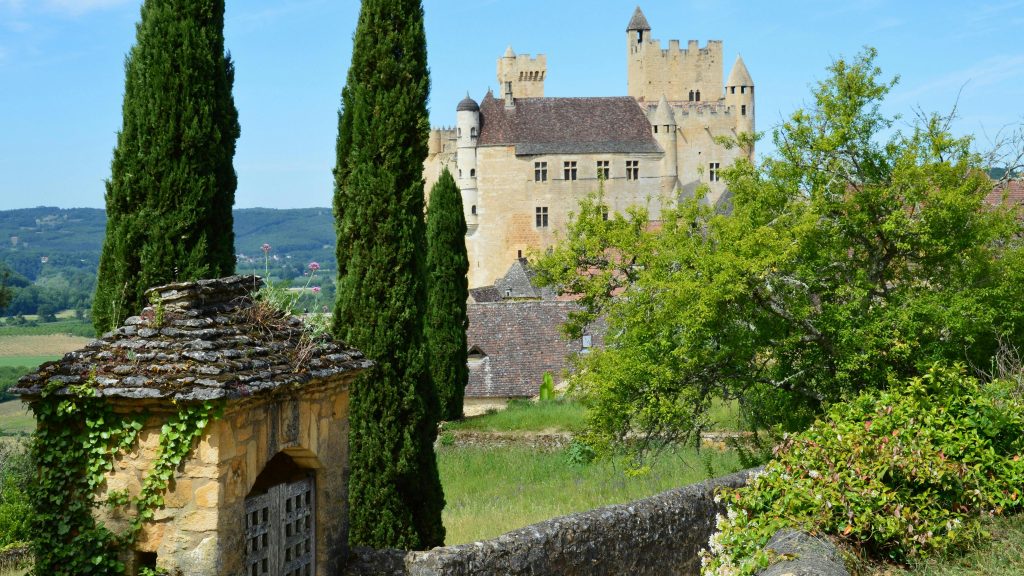
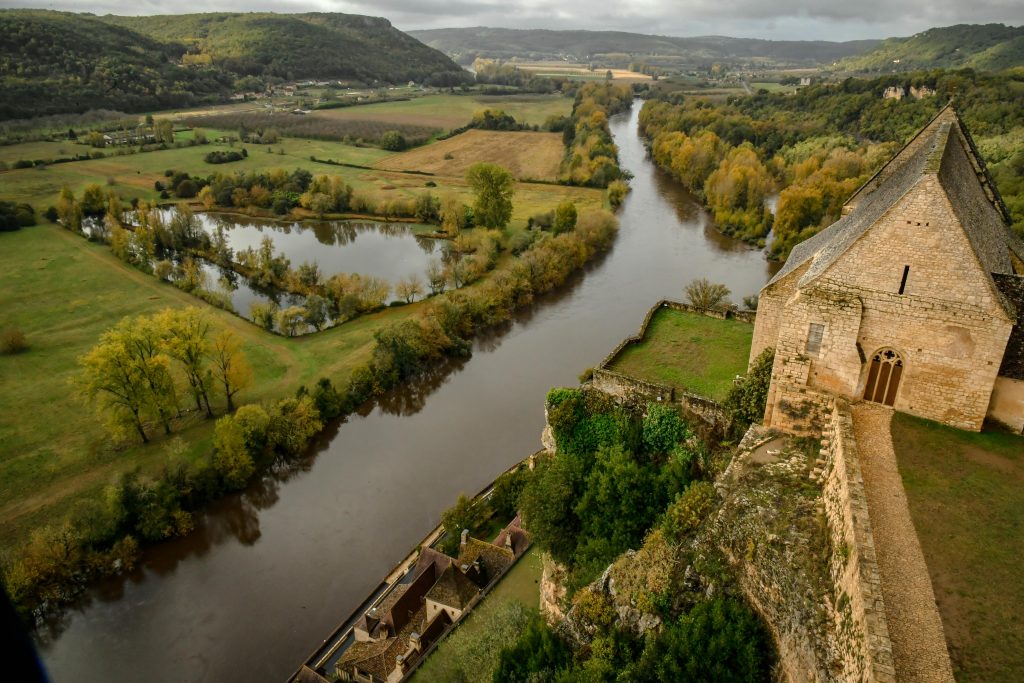
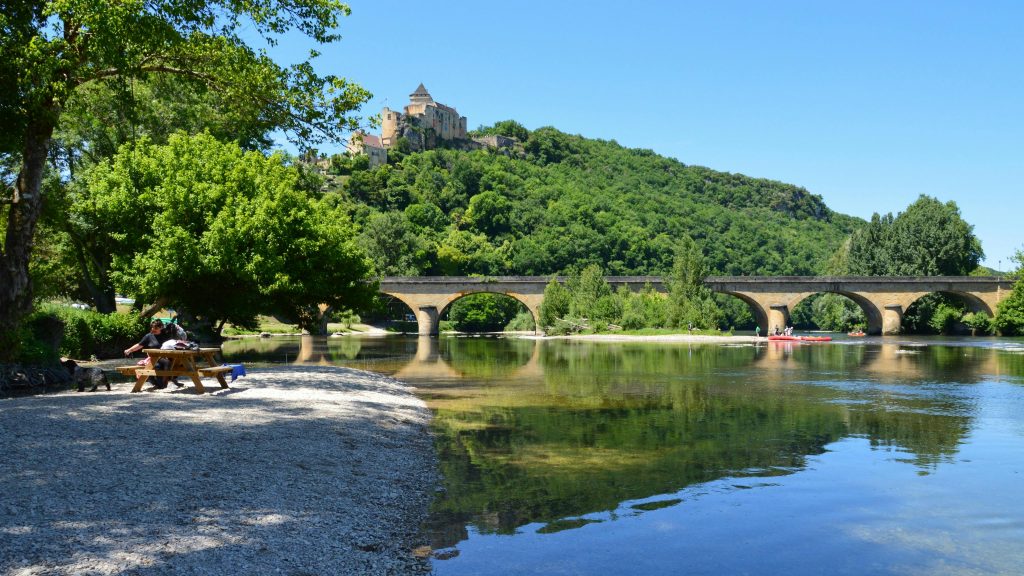
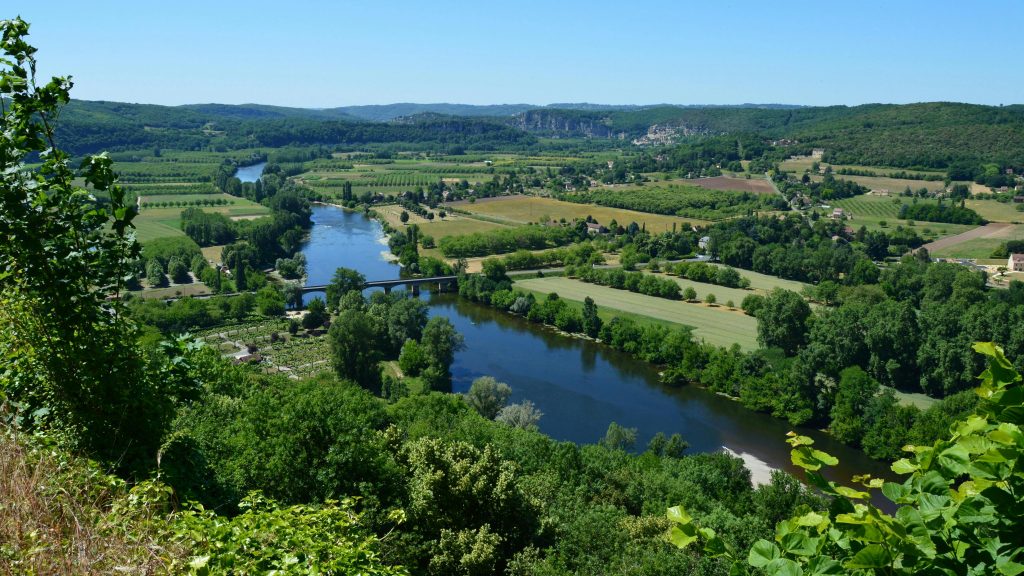
Today, you leave the town walls behind to discover the « Valley of the Five Castles » along the Dordogne River. This stretch of the river is so stunningly picturesque that it feels like traveling through a living history book.
The Highlights of your exploration:
- Château de Beynac: Perched high on a limestone cliff, this fortress offers one of the most spectacular views in the entire region. Walking its ancient ramparts, you can easily imagine the power it once held during the Hundred Years’ War.
- La Roque-Gageac: Often cited as one of the most beautiful villages in France, this village is uniquely built directly into the cliffside above the river. It’s a photographer’s paradise.
- The Dordogne River: You cannot visit this area without getting on the water. Taking a traditional gabare (a flat-bottomed boat) allows you to see the castles and cliffs from the same perspective that traders did hundreds of years ago.
Authentic Experiences & Dining Picks:
The « Slow Travel » Picnic: Since you are in the heart of the valley, skip a formal dinner for one night. Grab some local Cabécou (a small goat cheese from the region) and a fresh baguette, and find a quiet spot along the riverbank to watch the stars appear over the medieval fortresses.
Lunch at La Belle Étoile (La Roque-Gageac): Located right on the riverbank, this restaurant offers a beautiful terrace where you can enjoy fresh local cuisine while watching the river flow by. It’s the perfect spot for a leisurely lunch.
A Sunset Hike near Castelnaud: For a more active experience, take a short hike around the base of Château de Castelnaud. The light hitting the stone as the sun sets is unforgettable.
Want to map this out for your own dates? Build it in the free planner →
Day 5 – Rocamadour – The Sacred Heights of the Quercy
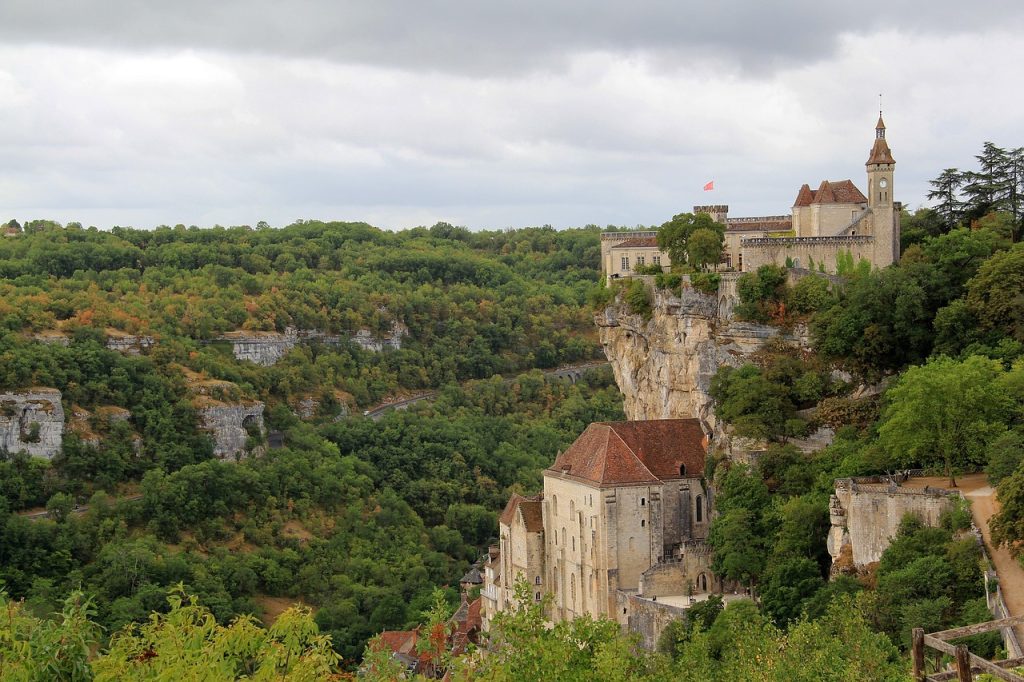
Today, you leave the Dordogne Valley and enter the Quercy region to discover one of France’s most breathtaking sites. Perched precariously on a cliff overlooking the Alzou Canyon, Rocamadour has been a major pilgrimage destination for centuries, attracting travelers with its sheer vertical scale and historic spiritual energy.
The Highlights of your Rocamadour experience:
- The Grand Escalier: Ascend the monumental Grand Escalier (Grand Staircase). While it is a challenging climb, it is a traditional part of the pilgrimage experience that offers increasingly dramatic views of the canyon below.
- The Sanctuary Complex: Explore the various chapels built directly into the rock face. The most famous is the Chapelle Notre-Dame, which houses the mysterious Black Madonna statue.
- The Alzou Canyon View: For the best perspective of how the village clings to the cliffside, walk the path along the canyon edge. The scale of the limestone cliffs against the medieval architecture is truly humbling.
Authentic Experiences & Dining Tips:
Sunset Reflection: Before the day ends, find a quiet spot away from the main streets to watch the lights come on in the village. As night falls, the illuminated sanctuary against the dark cliffside creates an ethereal atmosphere that feels worlds away from modern life.
A Taste of the Quercy: While in the area, you must try the local Rocamadour AOP, a small, creamy goat cheese named after the village. It is best enjoyed with a drizzle of honey or on a slice of rustic country bread.
Dining at « Jehan de Valon »: Located in the heart of the village, this restaurant offers a terrace with sweeping views of the valley. It is an excellent place to enjoy regional specialties while reflecting on the day’s journey.
Day 6: The Wonders of the Lot
After the awe-inspiring heights of Rocamadour, today is about discovery. You will venture into the depths of the earth before exploring some of the most authentic, quiet corners of the Quercy region—the perfect way to experience the soul of the French countryside.
The Highlights of your exploration:
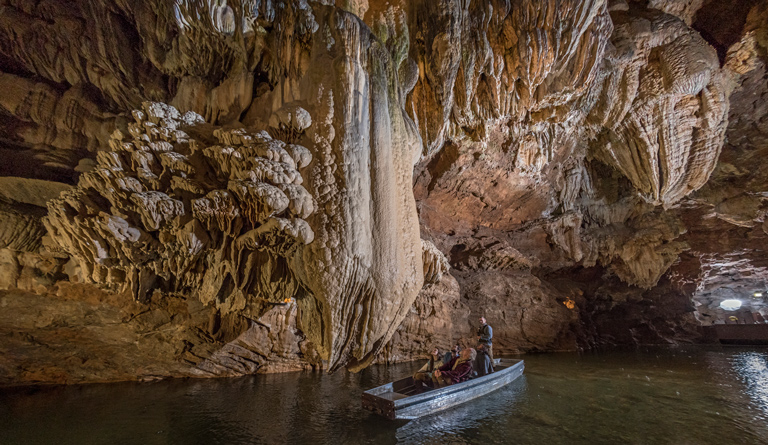
- The Gouffre de Padirac: Descend 103 meters underground to discover one of Europe’s most significant geological wonders. You will navigate a subterranean river by boat, passing through vast caverns adorned with spectacular limestone formations.
- The Village of Autoire: Known for its traditional architecture and its waterfall, this village offers a peaceful, authentic atmosphere that is a true hidden gem.
- Loubressac: Perched on a rocky promontory, this village provides some of the most stunning panoramic views over the Dordogne and Bave valleys, making it a perfect spot for photography.
Authentic Experiences & Dining Picks:
Photography Tip: Because these villages are built with local stone, they take on a beautiful, warm glow during the « golden hour »—just before sunset. It is the best time to wander the narrow streets and capture the local charm.
Quercy Picnic: Before heading to the villages, stop by a local bakery for fresh pain de campagne and a selection of local cheeses. Finding a quiet spot in Loubressac to enjoy your meal while overlooking the valley is a quintessentially Journeasy experience.
Day 7 – The Bastide Towns – A Grand Finale
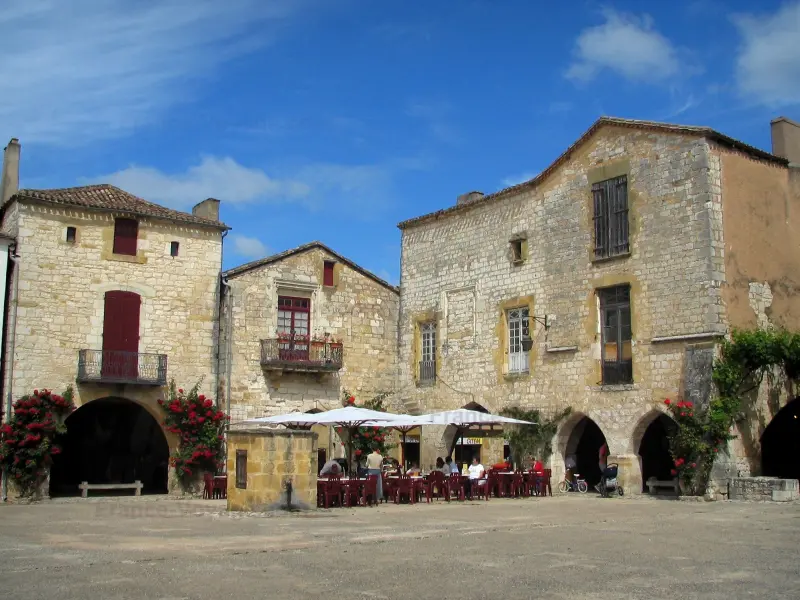
On your final day, take the time to slow down and wander through the fortified bastide towns of the Périgord. These unique urban creations were built during the Middle Ages with a specific grid-like layout, and they offer a perfect, peaceful conclusion to your road trip.
The Highlights of your final day:
- Monpazier: This is the best-preserved bastide in the region. Walking through its central square feels like stepping back into the 13th century, with its arcaded houses and central market hall.
- Architectural Exploration: Take the time to notice the « carré » (square) layout, which is a hallmark of these defensive towns. The symmetry and stone craftsmanship are a highlight for any history lover.
- Final Panoramic Views: Before departing, visit the surrounding hillsides near the bastides for one last perspective of the valleys you have spent the week exploring.
Authentic Experiences & Dining Tips:
The « Slow » Departure: Don’t rush to hit the highway. Spend your last few hours sitting at a sidewalk café, reflecting on the week and the beauty of these hidden landscapes that you’ve discovered.
Lunch at a Traditional Bistro: Find a small restaurant facing the central square in Monpazier. It is the perfect place to enjoy a final magret de canard or a regional salad while soaking in the quiet atmosphere of the town.
Gourmet Souvenirs: Before heading back, stop by a local boutique in the bastide to pick up artisanal walnut oil or local honey. It’s a wonderful way to bring a taste of the Quercy and Dordogne home with you.
Final Tips for Your First Trip to France
Planning your first trip to France is exciting, and this itinerary offers a great introduction to the country.
Here are a few tips to make the most of your journey:
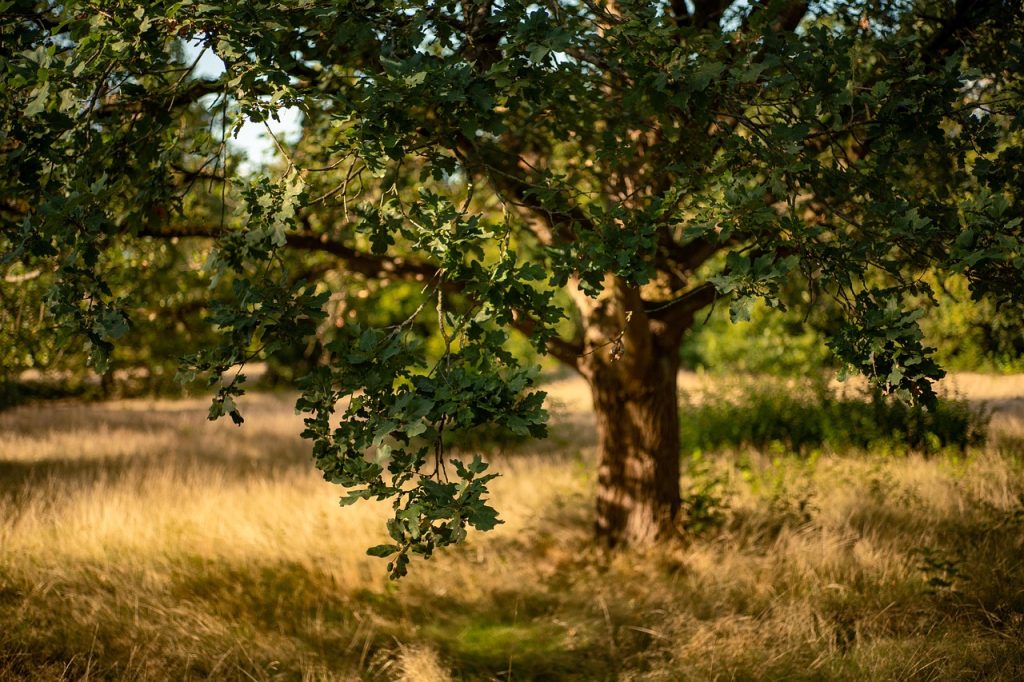
Take your time in villages.
Many of the best experiences happen simply by wandering through small streets and local cafés.
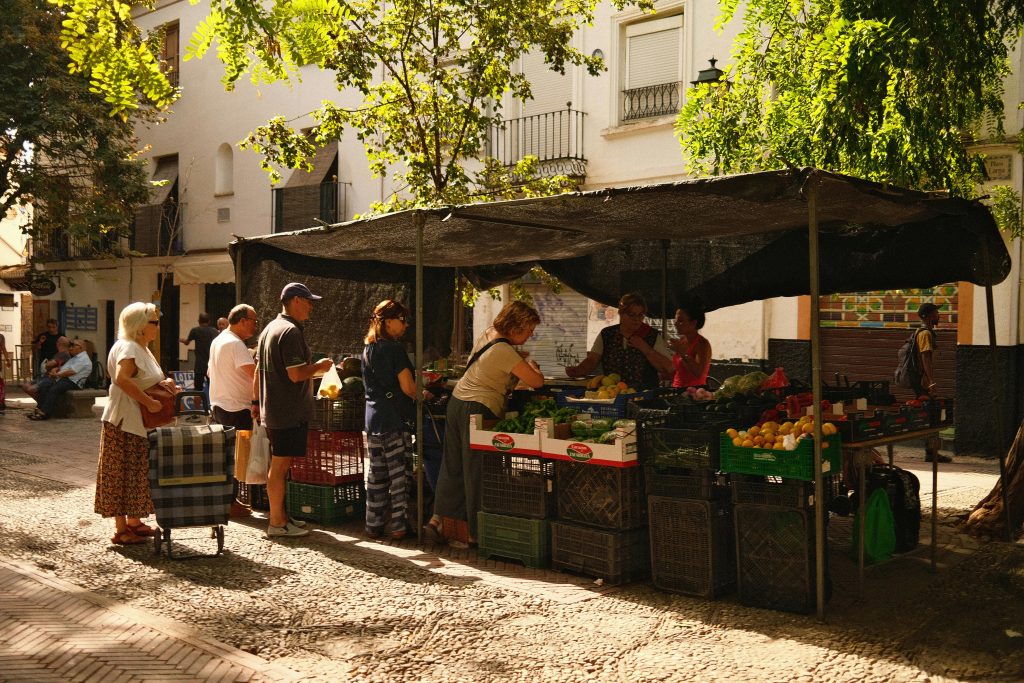
Visit markets whenever possible.
Local markets are an essential part of life in southwest France.
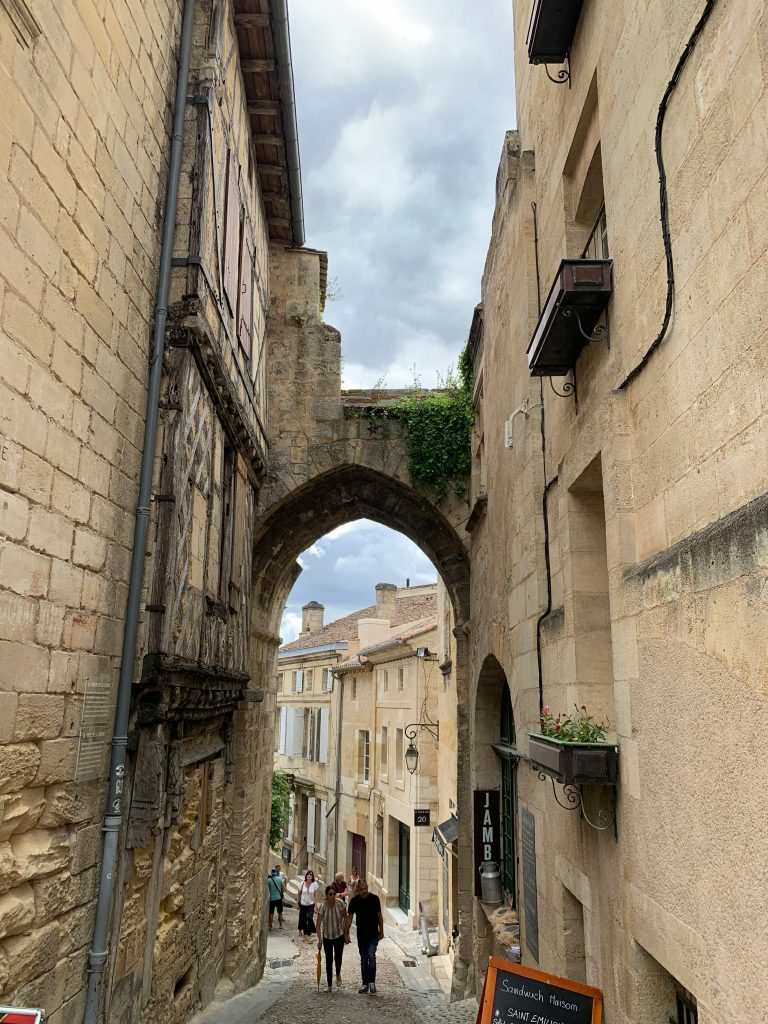
Book accommodation in historic towns.
Staying in places like Sarlat or Saint-Émilion makes the experience even more memorable.
Try the regional cuisine.
Foie gras, duck confit, walnuts, and local wines are specialties of the region.
Enr
FAQ
If you want to explore more regions, read my South of France itinerary guide.
Free planner
Planning this trip yourself?
Lay out your days, drag in the places worth your time, and see straight away when a day is trying to hold too much. Free, and you don’t need an account to start.

Madison Laffont
Travel planner · Journeasy France
I have lived all over France — I moved my whole life, and every corner of it turned out to be its own place. Travelling once, I met people who were only going to see Paris, and I felt frustrated on their behalf. There is so much more. That is where Journeasy France came from.
Planning a Trip to France
Planning the perfect road trip through France can take time, especially when choosing the best villages, routes, and places to stay.
If you’d like help designing a personalized itinerary in France, I offer travel planning services tailored to international travelers looking for a seamless and memorable trip.