
2 Days in Lyon
Lyon is the third-largest city in France, the one its own citizens will tell you is the best, and the one almost every first-time visitor changes trains in without leaving the station.
That is a mistake, and an easily corrected one. Lyon is two hours from Paris and one from the Alps. It has Roman ruins, a Renaissance quarter that UNESCO protects, and a claim to being the food capital of the country that nobody seriously contests. It also has, by French standards, almost no queues.
Two days is exactly right. Not because Lyon runs out — it does not — but because two days lets you see the two halves of it properly without turning the trip into a march.
In this guide
How Lyon is laid out
Two rivers meet at the bottom of the city. The old town is west of the Saone, the shops and restaurants sit on the peninsula between the rivers, and the Roman hill rises above both.
How to plan 2 days in Lyon: the layout
Two rivers, the Rhône and the Saône, meet at the bottom of the city. Between them sits the Presqu’île, the peninsula where the shops, squares and restaurants are. West of the Saône, at the foot of a hill, is Vieux Lyon, the Renaissance old town; on top of that hill is Fourvière, with the basilica and the Roman theatres. North of the Presqu’île is La Croix-Rousse, the old silk-weavers’ hill.
Once you have that, the city makes sense. Day one is the west bank and the hill. Day two is the Presqu’île and the Croix-Rousse.
Day one — the old city and the hill
Morning: Vieux Lyon and the traboules
The Renaissance quarter is one of the largest in Europe, and its particular feature is invisible from the street. Traboules are covered passages cut straight through buildings and courtyards, built so that silk could be carried across the city without getting wet.
Several are open to the public, and they are unmarked. That is the whole pleasure of them: you push a heavy door on rue Saint-Jean that looks entirely private, and find a spiral staircase and three courtyards behind it. The best-known runs from 27 rue Saint-Jean through to 6 rue des Trois Maries.
Give the quarter two and a half hours. Go before ten if you want the streets to yourself.
Midday: up to Fourvière
Take the funicular from Vieux Lyon station — it is part of the metro network, so a normal ticket covers it, and the walk up is steeper than it looks on a map.
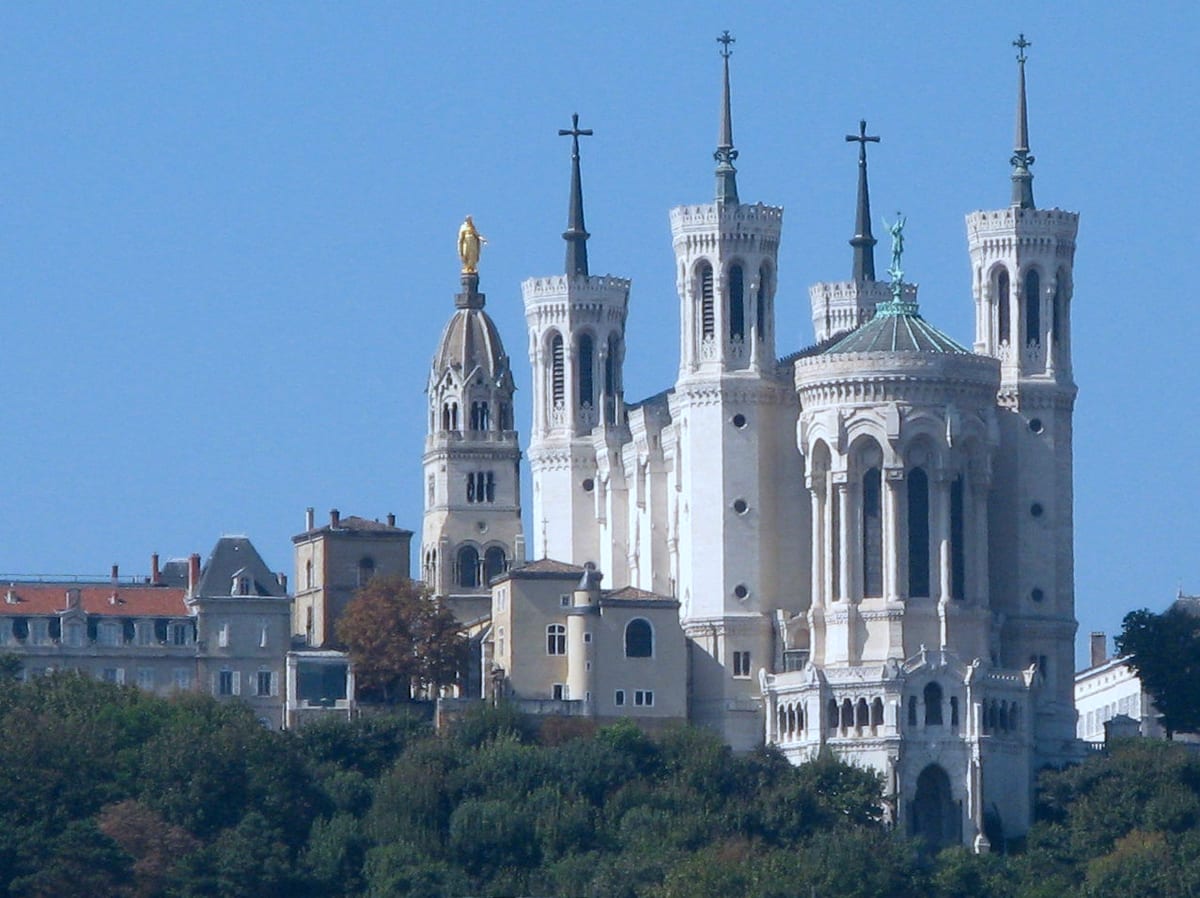
At the top: the basilica, which is aggressively ornate in a way that divides people, and the terrace beside it, which does not divide anyone. On a clear day you can see Mont Blanc.
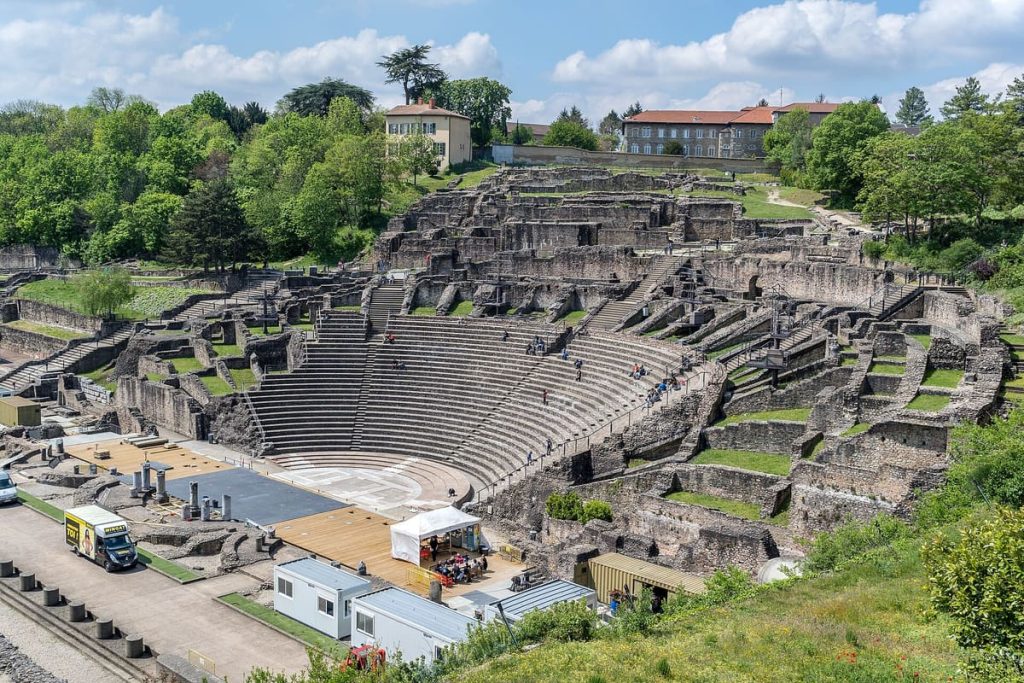
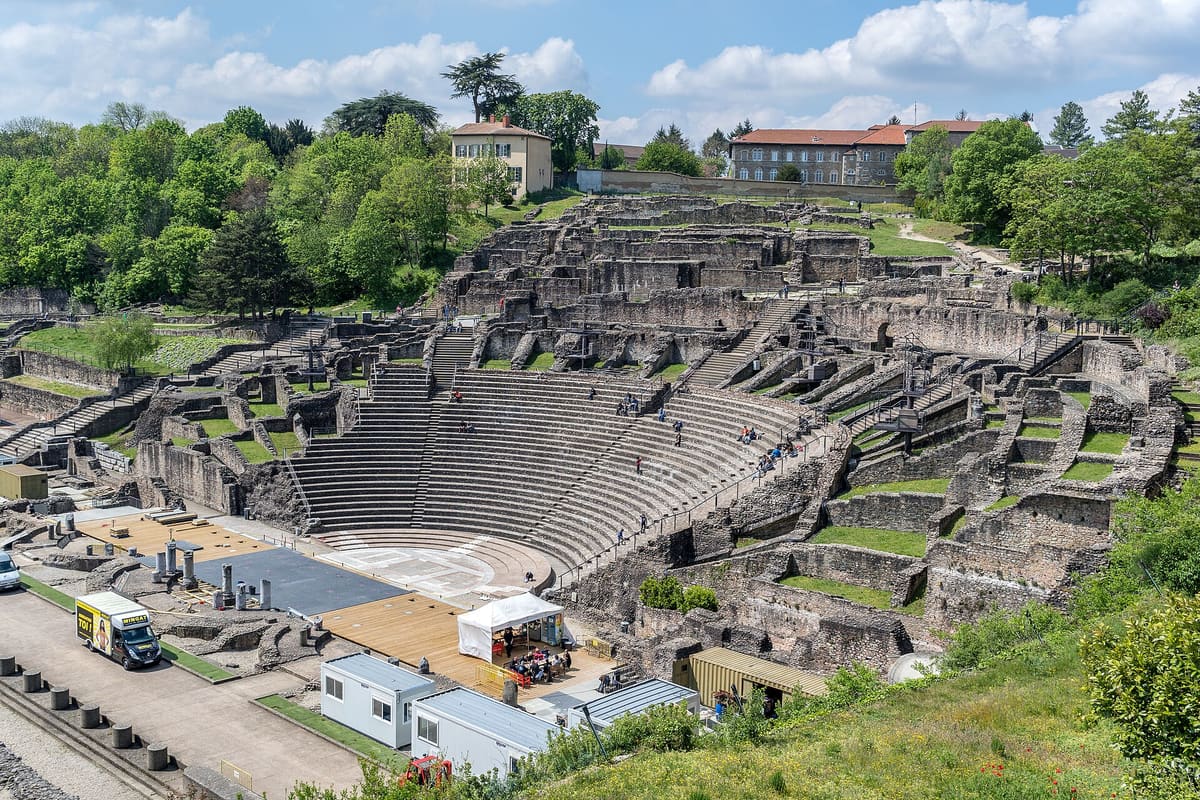
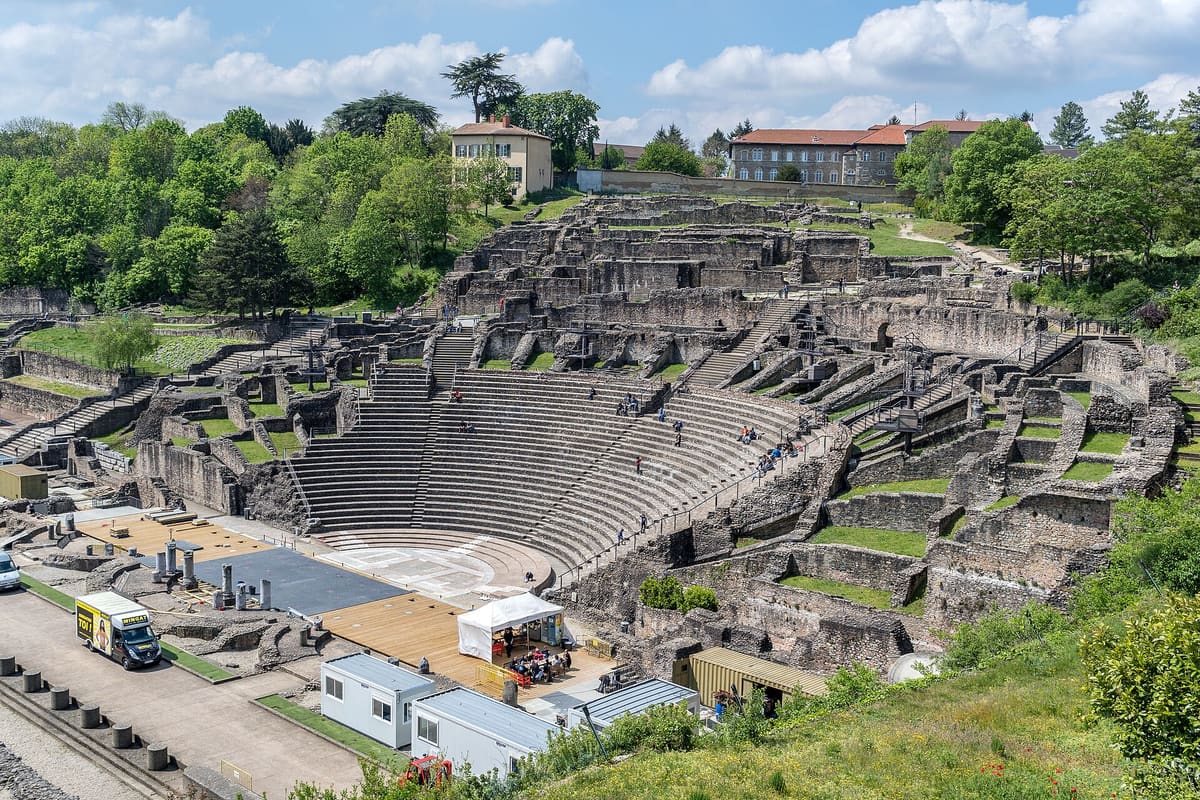
Behind the basilica are the Roman theatres, two of them, cut into the hillside and still used for concerts in summer. They are free, almost always quiet, and the oldest Roman theatre in France.
Afternoon: the Presqu’île
Walk down through the gardens rather than taking the funicular back — it is fifteen minutes and the views are better on foot. Cross to Place Bellecour, one of the largest pedestrian squares in Europe, and walk north up rue de la République to Place des Terreaux and the Hôtel de Ville.
Evening: a bouchon, chosen carefully
A bouchon is the traditional Lyonnais restaurant: small, loud, paper tablecloths, and a menu that assumes you are hungry and not squeamish. Quenelles, andouillette, pike dumplings, pork in every configuration.
The difficulty is that the word is not protected, and the streets of Vieux Lyon are full of places using it on a laminated menu in four languages. The genuine ones are mostly on the Presqu’île, not in the old town, and they are certified by a body called Les Bouchons Lyonnais — look for the plaque with Gnafron, the puppet with the red nose.
Want to map this out for your own dates? Build it in the free planner →
Day two — markets, silk and the modern city
Morning: Les Halles Paul Bocuse
The covered market the city feeds itself from, named after the chef who made French cooking famous and who shopped here. Oysters, quenelles and Saint-Marcellin, eaten standing at a counter with a glass of white at ten in the morning, surrounded by people doing their weekly shop.
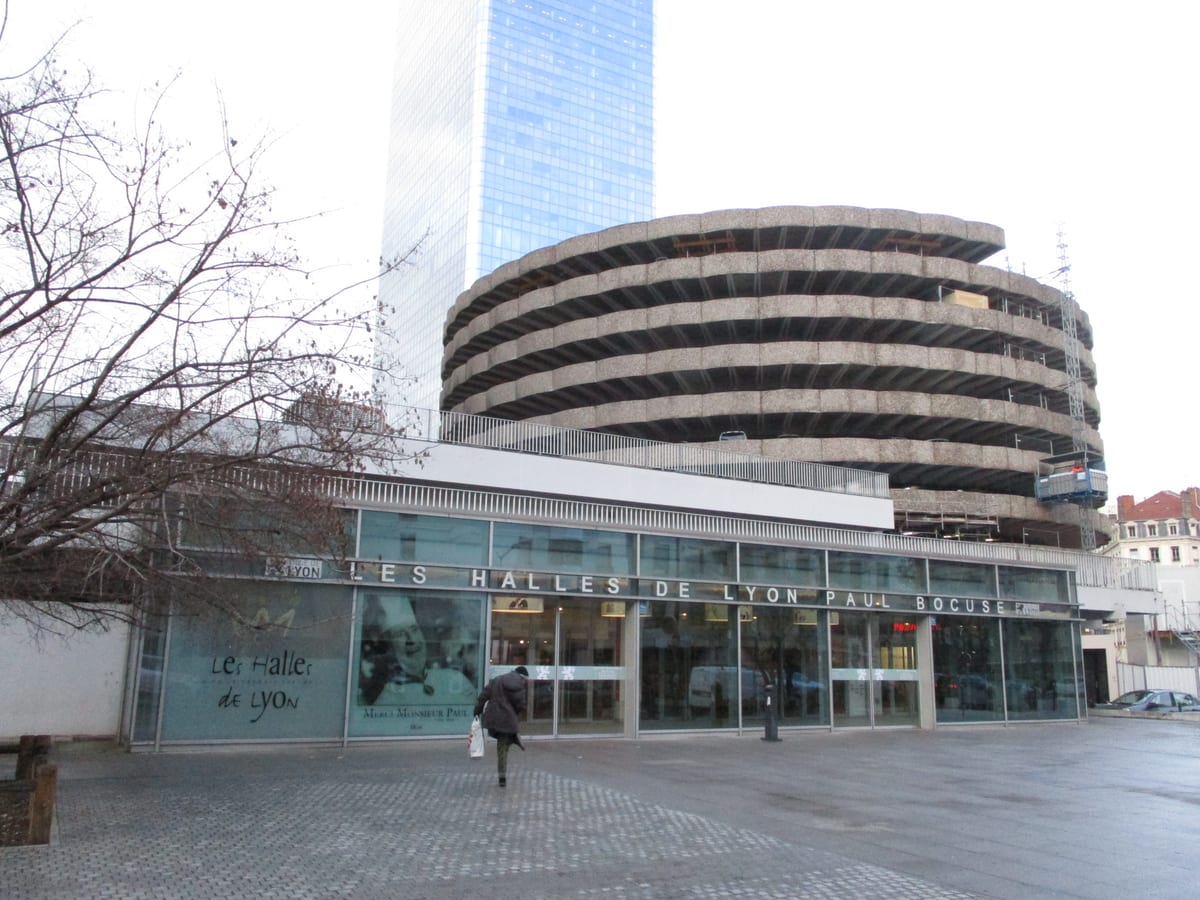
This is not a tourist market that sells souvenirs. It is a working one that happens to be extraordinary. Ninety minutes, and go hungry.
Late morning: La Croix-Rousse
The hill where the silk workers lived and worked — the canuts, whose looms needed high ceilings, which is why the buildings here are shaped differently from the rest of the city. They also staged one of the first workers’ uprisings in Europe, in 1831.
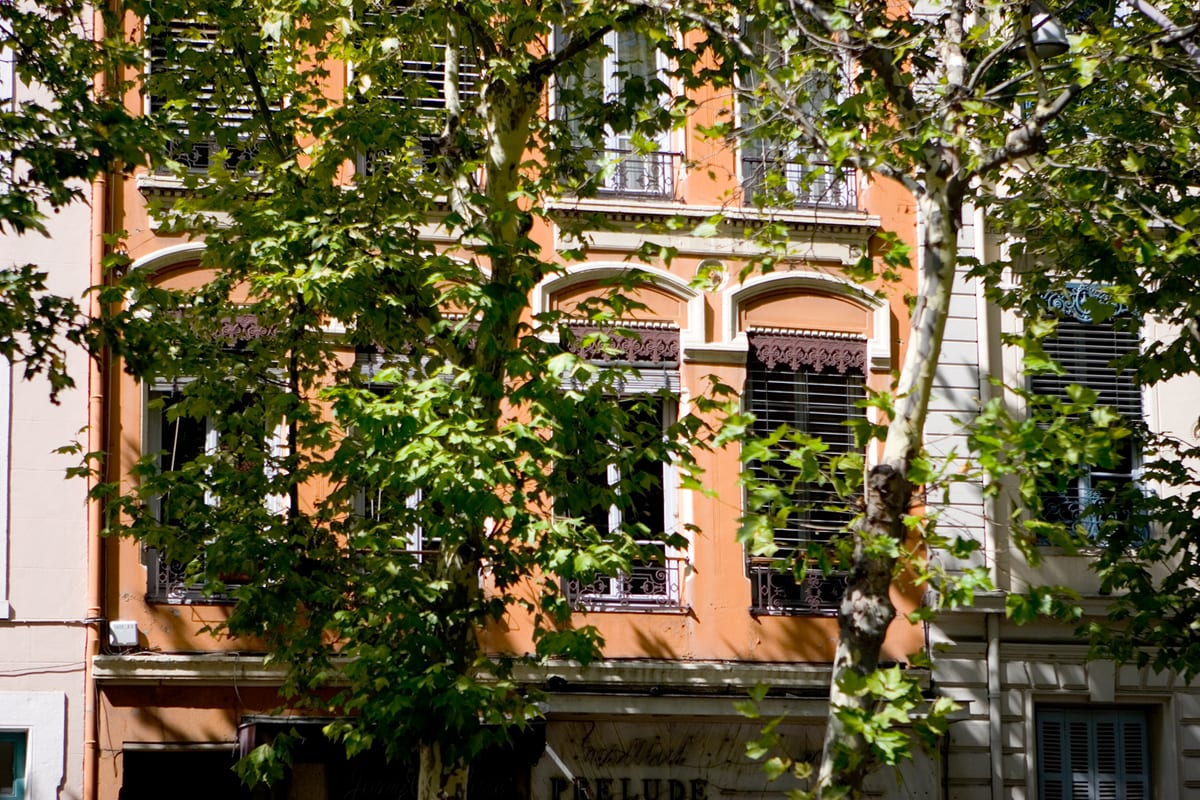
There are traboules here too, longer and steeper than the ones in Vieux Lyon. The Cour des Voraces, with its six-storey open staircase, is the one to find.
Afternoon: choose one
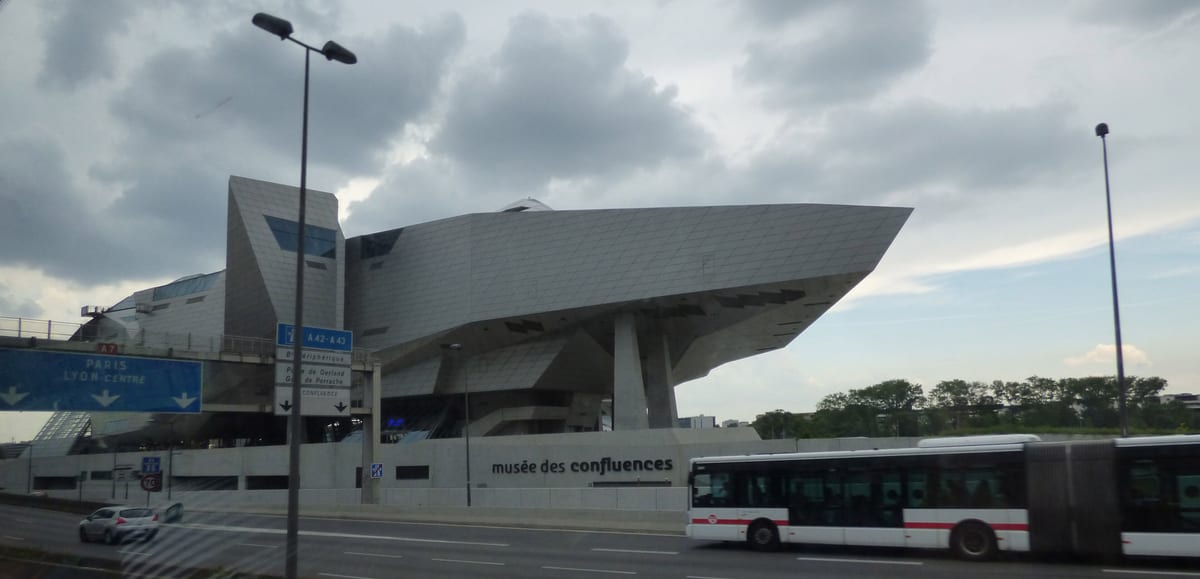
- The Musée des Confluences — a deconstructivist building at the point where the rivers meet, holding a collection that runs from dinosaurs to ethnography. Strange and excellent.
- The Musée des Beaux-Arts — in a former abbey on Place des Terreaux, and the best collection in France outside Paris.
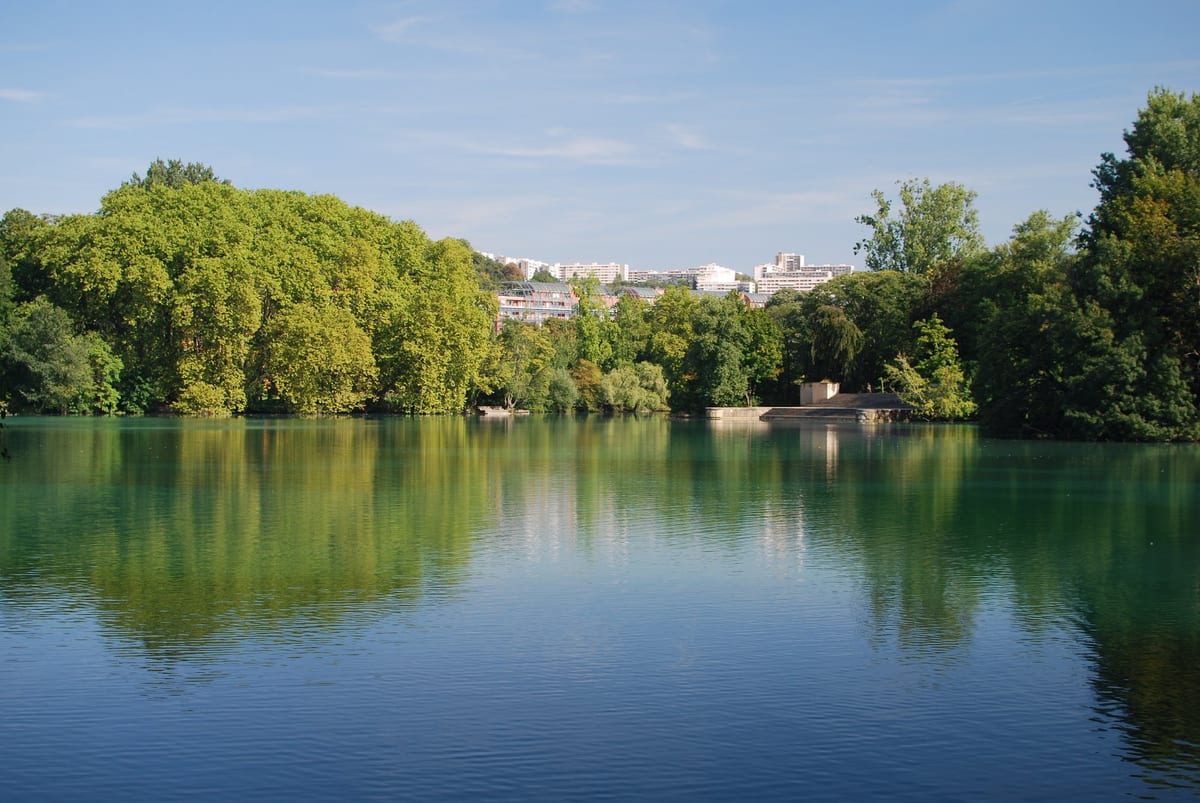
- The Parc de la Tête d’Or — a hundred hectares, a lake, a free zoo and a botanical garden, in the middle of the city.
Evening: something other than a bouchon
Lyon eats well above its weight at every level, and the second evening is the one to spend somewhere that is not traditional.
Le Bœuf d’Argent, on rue du Bœuf in the heart of Vieux Lyon, serves Franco-Italian cooking in a vaulted stone room — refined, beautifully presented, and considerably warmer in atmosphere than that description suggests.
Book well in advance. The kitchen is run by Viviana Pisacane, who won Top Chef France in 2026, and the room is not large.
If you have a third day
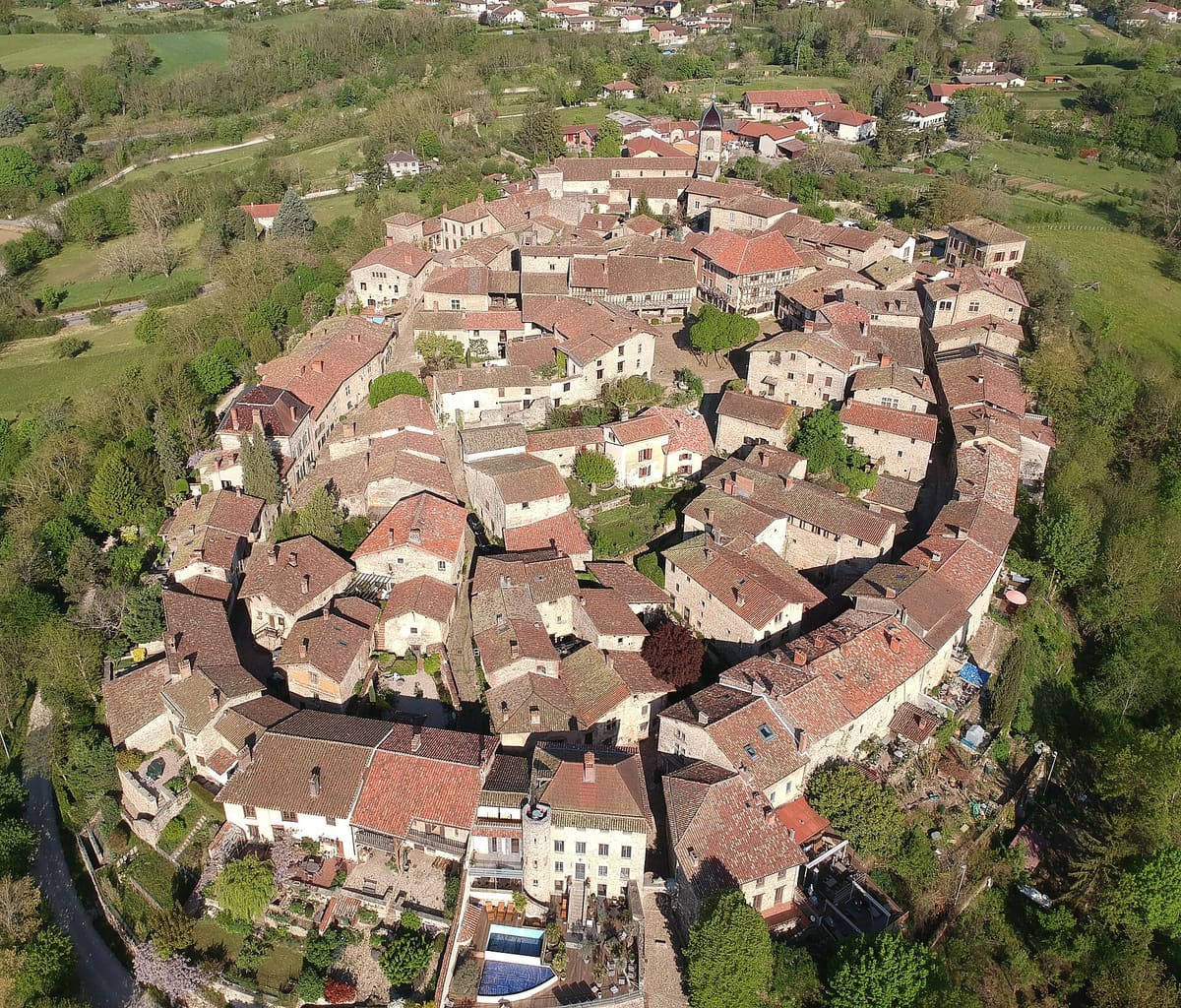
Lyon is one of the best bases in France for getting out of the city, and most visitors never do. All of these are under ninety minutes.
- Pérouges — a walled medieval village on a hilltop, forty minutes away. Cobbles, one square, and the sugar tart it is known for. Ninety minutes is enough.
- Vienne — thirty minutes south, with a Roman theatre still used for concerts and a temple standing in the middle of town.
- Oingt and the Pierres Dorées — villages built from golden limestone, strung through the hills north-west of the city. An afternoon’s drive, with tastings.
- Annecy — two hours, and the most beautiful town within reach. Turquoise lake, flower-covered bridges, the Alps behind.
- The Pilat Regional Park — ridge walks an hour away, with the Alps visible from the Crêt de la Perdrix on a clear day.
Practical things worth knowing
- Getting there: two hours from Paris by TGV, and the station you want is Part-Dieu for connections or Perrache for the Presqu’île. Lyon has its own international airport with a tram into the centre.
- Getting around: the metro is small, clean and enough. A day pass covers metro, tram, bus and both funiculars.
- Where to stay: the Presqu’île for convenience, Vieux Lyon for atmosphere. Both are walkable to everything.
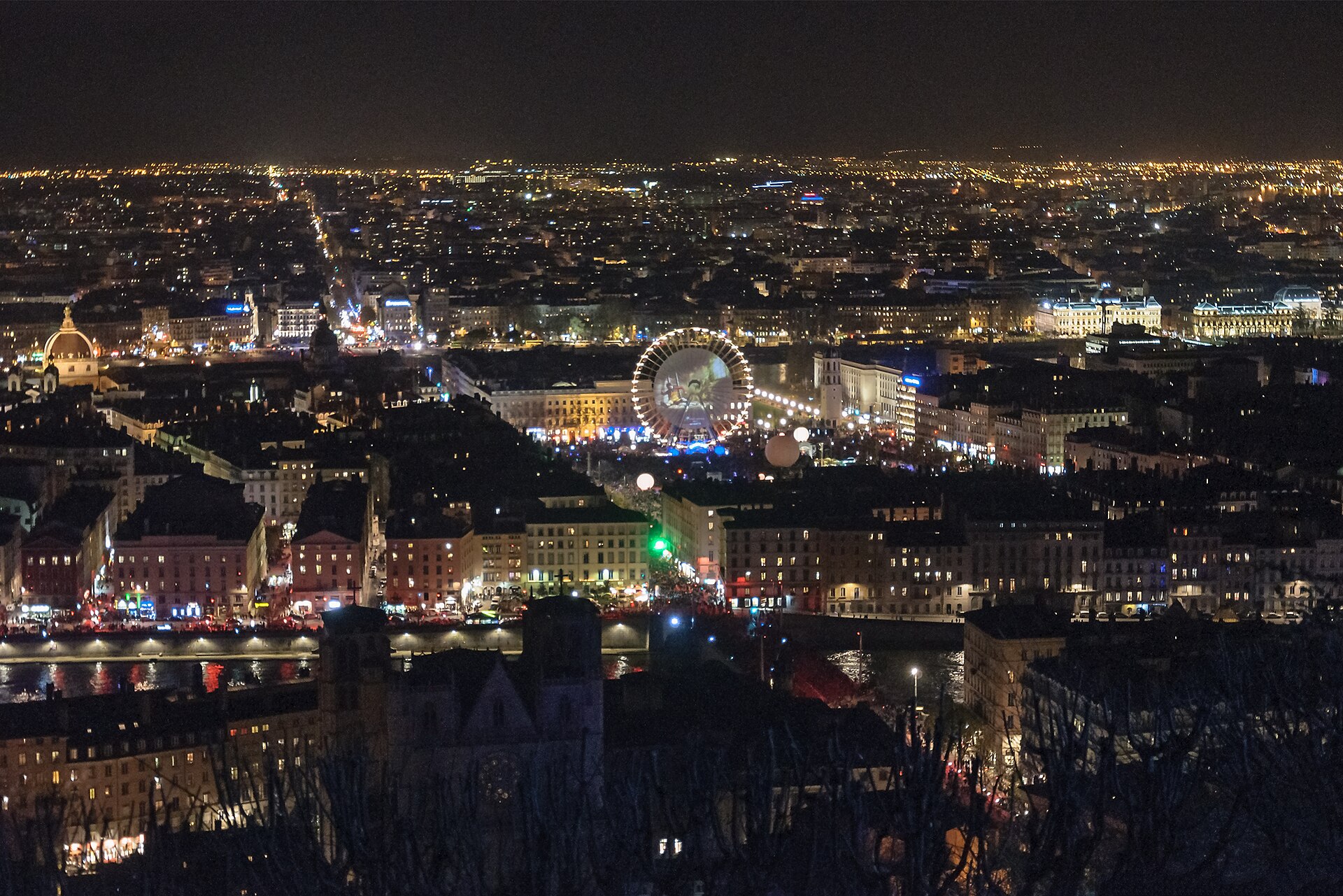
- When to go: May, June and September are ideal. December brings the Fête des Lumières around the 8th — extraordinary, and the one time of year the city is genuinely full.
- Sundays: the market is at its best, and much of the Presqu’île shopping is closed. Plan accordingly.
Common questions
Is two days in Lyon enough?
For the city itself, yes — two days covers Vieux Lyon, Fourvière, the Presqu’île, the market and the Croix-Rousse without rushing. A third day is better spent outside the city than inside it.
Is Lyon better than Paris?
Different, and easier. Lyon has no single sight on the scale of the Louvre, but it also has no queues, cheaper restaurants of a higher average standard, and a centre you can cross on foot. As a second French city it is the strongest choice in the country.
Do I need a car in Lyon?
No, and you will regret having one. The centre is dense, parking is difficult and expensive, and the public transport is good. Rent a car only for day trips, and only for the day you need it.
When is the Fête des Lumières?
Four nights around 8 December each year. The whole city becomes light installations and it is free. Book accommodation months ahead — the entire region comes.
How do I find a real bouchon?
Look for the certification plaque showing Gnafron, the red-nosed puppet, and favour the Presqu’île over the tourist streets of Vieux Lyon. A menu translated into four languages is the signal to keep walking.
Keep reading
- Best Day Trips from Lyon Without a Car
- The Beaujolais Wine Route from Lyon
- Annecy from Lyon: The Perfect Day Trip
Official information and opening times: Lyon Tourist Office.
Free planner
Planning this trip yourself?
Lay out your days, drag in the places worth your time, and see straight away when a day is trying to hold too much. Free, and you don’t need an account to start.

Madison Laffont
Travel planner · Journeasy France
I have lived all over France — I moved my whole life, and every corner of it turned out to be its own place. Travelling once, I met people who were only going to see Paris, and I felt frustrated on their behalf. There is so much more. That is where Journeasy France came from.